
Choosing between Invisalign and braces involves more than deciding how you want your smile to look. Both treatments can straighten teeth and improve bite alignment, but they differ in comfort, appearance, maintenance, and treatment approach. Understanding these differences can help you decide which option may be right for you.
What Is the Difference Between Braces vs. Invisalign?
When comparing braces and Invisalign, both treatments gradually move teeth into better alignment, but they use different methods.
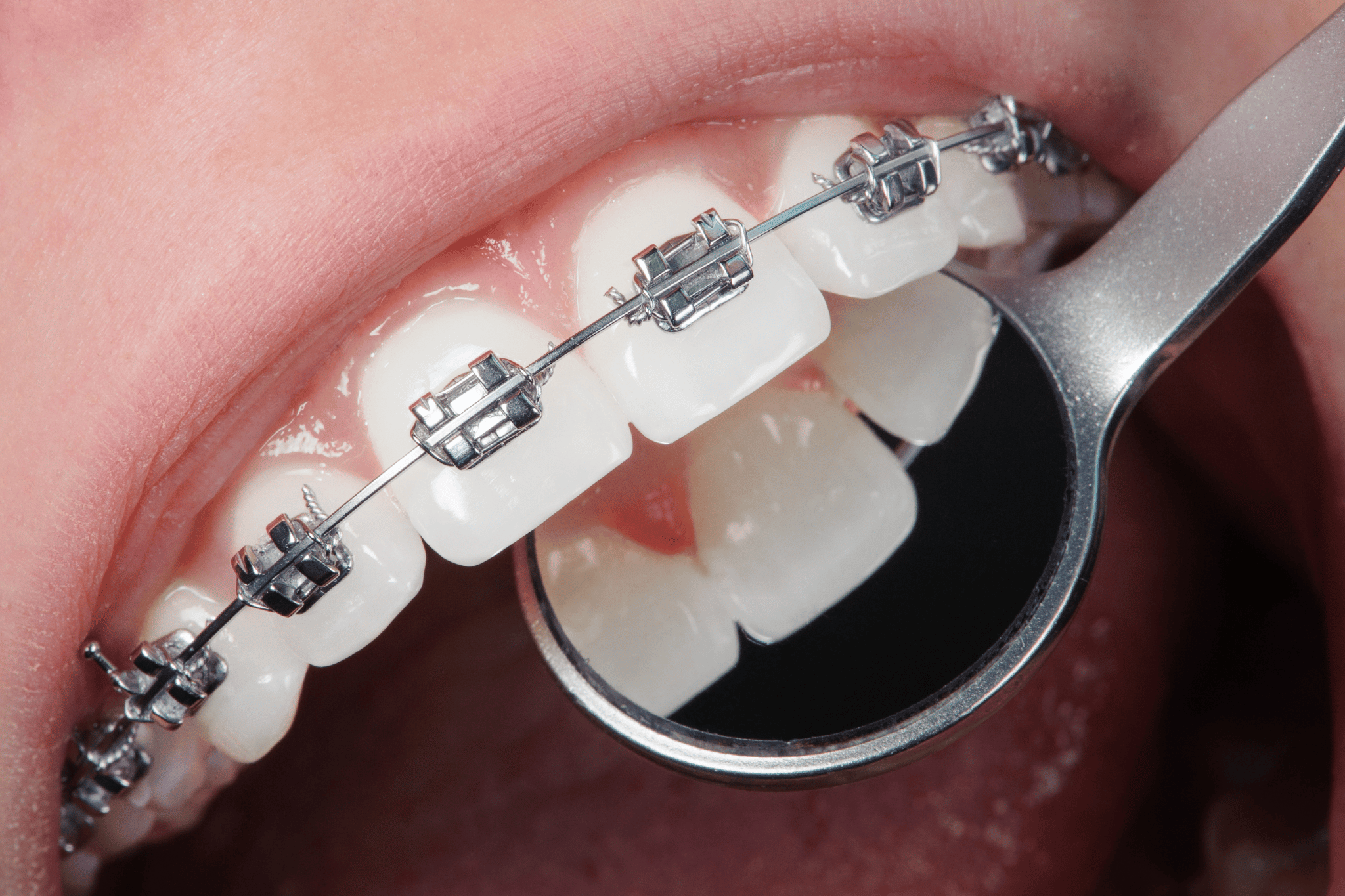
Invisalign uses a series of custom-made, removable clear aligners. Each set of aligners is shaped to gently shift your teeth a small amount, and you typically move to the next set every one to two weeks, depending on your treatment plan. Traditional braces use brackets bonded to the teeth and connected by archwires. The wires apply steady pressure that guides teeth into position, and an orthodontist adjusts the wires during regular visits.
Invisalign vs. Braces: Key Differences
Several factors separate braces and Invisalign treatment. The table below compares the most important ones.
| Factor | Invisalign | Traditional Braces |
|---|---|---|
| Appearance | Nearly invisible clear aligners | Visible brackets and wires |
| Removability | Removable for eating and cleaning | Fixed to teeth |
| Maintenance | Requires cleaning aligners and teeth | Requires cleaning around brackets and wires |
| Eating | No major food restrictions when aligners are removed | Certain hard or sticky foods should be avoided |
| Wear time | Typically 20 to 22 hours daily | Worn continuously |
| Office visits | Periodic progress checks | Regular adjustment appointments |
Appearance is often the first thing people weigh. Clear aligners are difficult to notice in conversation, while braces are visible when you smile. Removability is the biggest practical difference. You can take Invisalign out to eat, drink beverages other than water, and brush your teeth normally. With braces, food choices and brushing technique require more daily attention.
Invisalign versus Braces: Which is More Effective?
Neither option is universally more effective. Both Invisalign and braces can treat many common concerns, including crowding, spacing, and certain bite problems.
Braces often provide greater control for complex tooth movements, such as rotating a tooth or moving a tooth vertically. They may be the stronger choice for severe alignment issues. Invisalign can treat many mild to complex cases, though suitability depends on the specific tooth movements and bite issues involved.
Treatment effectiveness also depends on patient compliance. Invisalign treatment depends on wearing aligners as directed, typically 20 to 22 hours a day. Skipping wear time can slow progress or require extra aligner sets. Braces do not rely on daily choices in the same way, which is one reason some patients prefer them.
Pros and Cons of Invisalign vs. Braces
Both treatments have advantages and limitations. Comparing how each fits into your daily routine can help you understand what to expect.
Benefits and Limitations of Invisalign
Invisalign offers a discreet appearance, removable aligners, and easier brushing and flossing because nothing is attached to the teeth. Many adults appreciate that they can keep up with work and social plans without visible hardware.
The tradeoff is that Invisalign requires consistent daily wear. You must remove aligners before eating or drinking anything other than water, and you need to clean and store them properly. Some orthodontic cases may be better suited to braces or may require additional treatment beyond clear aligners alone.
Benefits and Limitations of Traditional Braces
Traditional braces are fixed to the teeth, so you don't have to remember to wear them every day. They are effective for complex tooth movements and severe alignment issues.
The main limitations are visibility and food restrictions. Braces are noticeable, and sticky, hard, or chewy foods can break brackets or wires. Cleaning around brackets takes extra time and care to prevent staining and decay.
How Long Does Invisalign vs. Braces Treatment Take?
Treatment time varies based on alignment needs, bite complexity, and how each patient responds. Both braces and Invisalign can take several months to a few years. Mild cases often finish faster, while severe bite problems take longer.
A dentist or orthodontist can give a more accurate timeline after examining your teeth and bite. Digital scans, X-rays, and a clinical examination can help your provider develop a treatment plan.
Braces or Invisalign: Which Is Right for You?
Choosing between braces and Invisalign depends on your treatment goals, case complexity, lifestyle, and personal preferences. Think about how important appearance is to you, how much daily maintenance you’re willing to handle, and whether you can reliably wear removable aligners for most of the day.
If you prefer a less noticeable treatment, Invisalign may appeal to you. If you have a complex bite, braces may be a better fit depending on the tooth movements needed. A dental or orthodontic evaluation is the best way to find out which option fits your situation.
Invisalign and Orthodontic Care at Total Health Dental Care
Both traditional braces and Invisalign treatment can improve tooth alignment, but the right option depends on your individual needs. Total Health Dental Care helps patients evaluate their alignment concerns and explore the orthodontic options that make sense for them.
Schedule a consultation to discuss your smile goals and learn whether Invisalign or another orthodontic approach may be right for you.
FAQ
Are Invisalign braces?
Invisalign is not traditional braces, though it is a form of orthodontic treatment that moves teeth into better alignment. Instead of brackets and wires, Invisalign uses a series of custom clear aligners that you remove to eat and clean. Both approaches are orthodontic and can achieve similar goals, but they work through different methods and require different daily habits.
Are braces cheaper than Invisalign?
The cost of traditional braces and Invisalign can be comparable, though pricing depends on treatment complexity, duration, and your provider. Dental insurance may cover part of either treatment, depending on your plan. Your dental team can provide a personalized estimate during your consultation.
How do I know if I should get braces or Invisalign?
The right choice depends on your alignment needs, lifestyle, and priorities. If you want a discreet option and can wear aligners 20 to 22 hours a day, Invisalign may be a good fit. If your case involves complex tooth movements or you prefer a treatment that doesn't require daily removal, braces may be the better option. An orthodontist can evaluate your bite and recommend the approach most likely to deliver the results you want.
What is more painful, braces or Invisalign?
Both treatments cause some soreness, especially in the first few days after a new appliance or aligner set. Braces can irritate cheeks and lips as brackets and wires rub, and adjustment days often bring pressure. Invisalign can also cause pressure as each new tray engages the teeth, and some people find it more comfortable because it has no brackets or wires to irritate the cheeks and lips. Pain usually decreases as your mouth adjusts, and over-the-counter pain relievers help most patients manage discomfort.
