
What Causes Yellow Teeth? Teeth Discoloration Explained

You look in the mirror and notice your teeth aren't as bright white as they used to be. Whether they've been gradually getting more yellow over the years or you suddenly noticed a change, yellow teeth can understandably affect your confidence.
The truth about tooth discoloration is that it’s often not a sign of poor oral health. Many people with excellent brushing and flossing habits notice their teeth getting yellower over time. Sometimes the problem is as simple as loving your morning coffee. Other times, it's a natural part of aging. And sometimes, teeth discoloration signals something else going on that your dentist should evaluate.
This guide explains what causes yellow teeth, why some people's teeth yellow more than others, the different types of teeth stains and discoloration, and treatment options that can help restore a brighter smile.
Why Do Teeth Turn Yellow?
Before we cover what causes yellow teeth, it helps to know what healthy tooth color looks like. Natural tooth color varies between people. Some people naturally have whiter teeth while others have naturally more yellow-toned teeth. Both can be completely healthy.
Your tooth structure plays a big role in how yellow your teeth appear. Each tooth has an outer layer of enamel that's relatively transparent, and underneath is dentin, which is naturally more yellow. When enamel is thicker and more opaque, less of the yellow dentin underneath shows through.
As you age, enamel can become thinner and more translucent, and more of the underlying yellow dentin shows through. This is why many people notice their teeth getting yellow even when their oral hygiene hasn't changed. It's a natural part of how teeth change over time.
Common Causes of Yellow Teeth
Several different factors contribute to discolored teeth:
Foods and Drinks That Stain
What you consume significantly impacts tooth color. Coffee, tea, red wine, and dark sodas gradually stain tooth enamel through repeated exposure. These beverages contain pigments that stick to enamel and build up over time. Acidic beverages may also erode enamel, making the underlying dentin more visible.
Certain foods, including tomato-based sauces, berries, and beets, contain pigments that can contribute to teeth stains and discoloration. Frequent exposure to these foods makes discoloration more noticeable over time.
Smoking and Tobacco Use
Tobacco products can cause stubborn yellow or brown tooth discoloration. Smoking leaves brown or yellow stains on tooth surfaces that get progressively darker with continued use. These stains can become more difficult to remove over time.
The longer someone smokes, the more pronounced the dental stains and discolorations may become. Tobacco also increases the risk of gum disease and other oral health problems beyond just discoloration.
Plaque and Tartar Buildup
Inconsistent brushing and flossing let plaque and tartar build up on teeth. Plaque can contribute to a yellow appearance, while tartar (hardened plaque) looks yellow or brown, and brushing alone can't remove it. Professional dental cleaning removes tartar buildup, which can improve the yellow appearance it causes.
Aging and Natural Enamel Changes
Teeth yellowing is a natural part of aging. As you age, enamel gradually becomes thinner through normal wear. Additionally, the dentin underneath can become darker with age. Together, these changes can make teeth appear increasingly yellow over decades, even with excellent oral care.
This is why many people notice their teeth getting yellow gradually over their lifetime, regardless of their brushing and flossing habits.
Medications, Dental Trauma, and Tooth Development
Certain medications can cause intrinsic tooth discoloration. Tetracycline antibiotics, when taken during tooth development, can cause yellow, gray, or brown discoloration. Certain medical treatments may also contribute to tooth discoloration.
Dental trauma or injury can cause a tooth to darken or change color as it responds to the injury. A single tooth suddenly changing color should be evaluated by a dentist.
Types of Tooth Discoloration

Finding out whether your tooth discoloration is on the surface or deeper in the tooth helps determine the best treatment approach.
Extrinsic Tooth Discoloration
Surface stains develop on the outside of the enamel from foods, beverages, tobacco, and plaque buildup. Extrinsic tooth stains often respond well to professional cleaning or whitening treatments. Since they're on the surface, they're typically easier to address than deeper stains.
Intrinsic Tooth Discoloration
Deep teeth stains develop within the tooth rather than on its surface. These include discoloration from medications, dental trauma, tooth development issues, or changes within the pulp. Because intrinsic staining originates within the tooth, it may respond differently to whitening than surface stains. These cases may require different treatment approaches, such as bonding or veneers.
What Different Tooth Colors Mean
Discolored teeth aren't always yellow. Different colors can have different causes.
Yellow teeth usually result from natural dentin showing through thinner enamel, staining from foods and beverages, or plaque buildup.
Brown or dark discoloration may come from tobacco, foods and beverages, tartar, or decay.
Gray or dark teeth might indicate trauma, internal changes, or certain medications.
White spots on teeth can result from enamel mineralization changes, fluorosis, or early demineralization from decay.
A single tooth suddenly changing color, particularly darkening significantly, should be evaluated by a dentist to rule out internal problems or decay.
How to Treat Yellow Teeth and Tooth Discoloration
Treatment for yellow teeth depends on the underlying cause and whether the discoloration is surface-level or internal.
Professional Dental Cleaning
Professional cleaning removes plaque, tartar, and some surface staining that brushing at home cannot address. Teeth discoloration caused by plaque or tartar may improve after a professional cleaning removes the buildup. Cleaning and whitening serve different purposes, though both can improve tooth appearance.
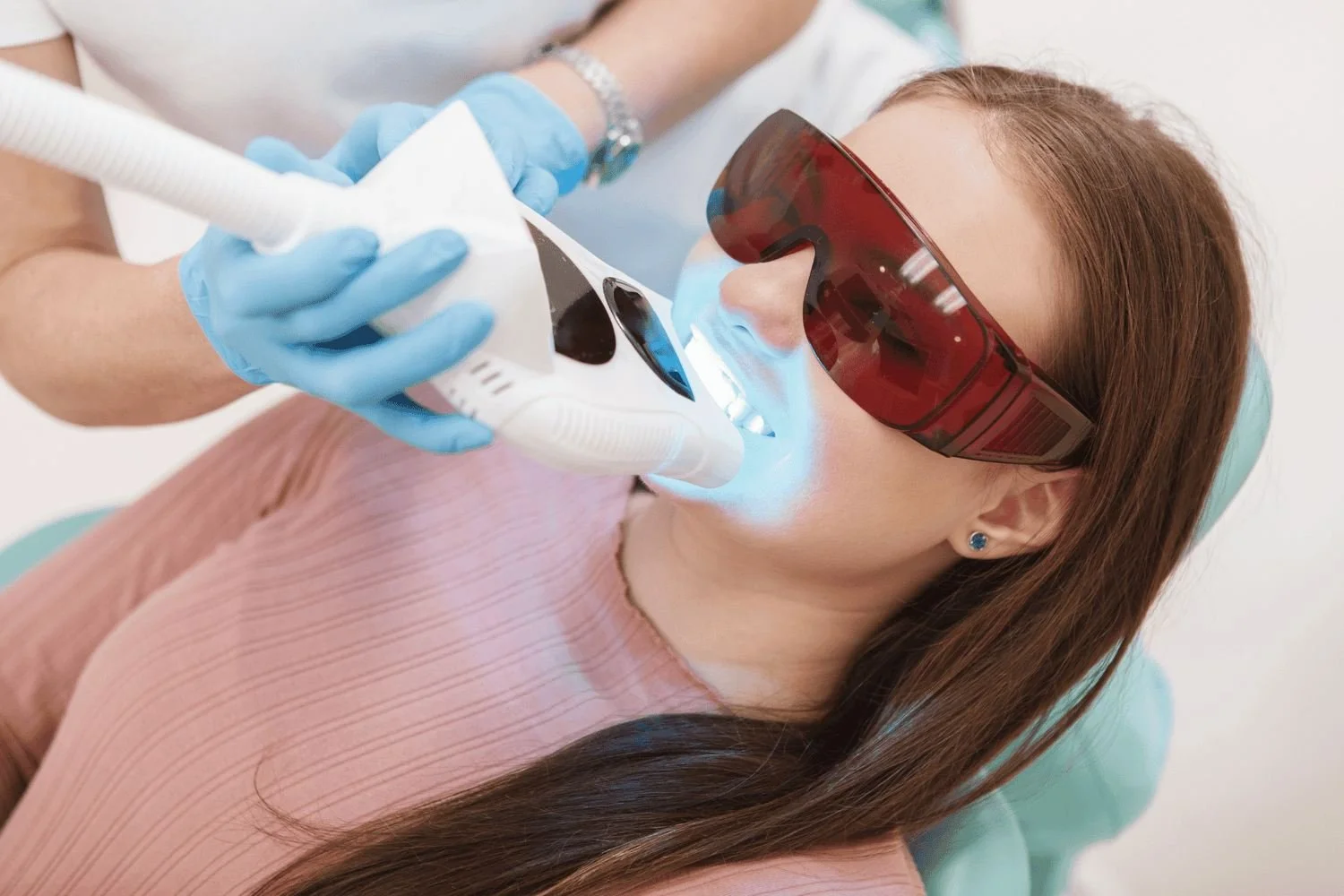
Professional Teeth Whitening
Professional teeth whitening can help address certain extrinsic stains from foods, beverages, and other sources of surface discoloration. Whitening uses bleaching agents to lighten tooth color and reduce discoloration within the enamel and dentin. Results vary depending on the cause of the discoloration and your natural tooth shade. Some intrinsic stains may be more difficult to whiten and may require longer or different treatment approaches.
Cosmetic Dental Treatments for Deep Stains
When deep teeth stains don't respond to whitening, or when discoloration is intrinsic, dental bonding or veneers may be options. Bonding applies tooth-colored resin to the tooth surface, covering discoloration. Veneers are custom shells covering the front surface of teeth, masking discoloration underneath.
How to Prevent Teeth Stains and Discoloration
It may seem too obvious, but brushing and flossing reduce plaque and help remove surface stains. Limiting exposure to heavily staining foods, beverages, and tobacco can also help reduce discoloration. Finally, regular professional cleanings remove buildup that can contribute to yellowing.
If you notice teeth stains and discoloration developing or changing, discuss it with your dentist rather than relying solely on whitening products. Your dentist can identify the cause and recommend treatment.
Address Tooth Discoloration with Total Health Dental Care
Yellow teeth can result from many different causes. Identifying the source of your discoloration is an important first step toward choosing the right treatment for your needs. At Total Health Dental Care, our team can evaluate your teeth to help determine what's causing the discoloration and recommend professional cleaning, whitening, or cosmetic treatment based on your individual situation.
Schedule a consultation to discuss your tooth discoloration and explore treatment options that can brighten your smile.
Explore our complete dental services to learn more about professional teeth whitening and available cosmetic treatments.
FAQ
Can yellow teeth become white again?
Many cases of stained or yellow teeth can be lightened with professional treatment. Surface stains from foods, beverages, and tobacco often respond to professional cleaning and whitening. However, results depend on the cause of the discoloration. Some deep teeth stains or intrinsic stains may not respond well to whitening alone. Your dentist can assess your specific situation and recommend the best approach.
Can dehydration cause yellow teeth?
Dehydration itself doesn't directly cause your teeth to turn yellow, but it can contribute indirectly. Dehydration can contribute to dry mouth, and reduced saliva flow may make it harder for the mouth to naturally wash away food particles and debris. Persistent dry mouth can also increase the risk of tooth decay and other oral health problems.
What deficiency makes teeth yellow?
Vitamin deficiencies don't typically cause yellow teeth directly, but certain deficiencies can affect tooth development and oral health. Nutritional deficiencies during tooth development may affect enamel formation, while deficiencies that affect gum and bone health can contribute to other oral health problems. Maintaining good nutrition supports overall oral health and tooth appearance.
Why are my teeth different colors?
Teeth naturally have varying shades of color within your mouth. This variation can result from differences in enamel thickness between teeth or varying levels of exposure to staining substances. A single tooth being significantly darker or changing color should be evaluated by a dentist to rule out decay, trauma, or internal problems.
