
Dental Implants in Berkeley: Cost and Timeline
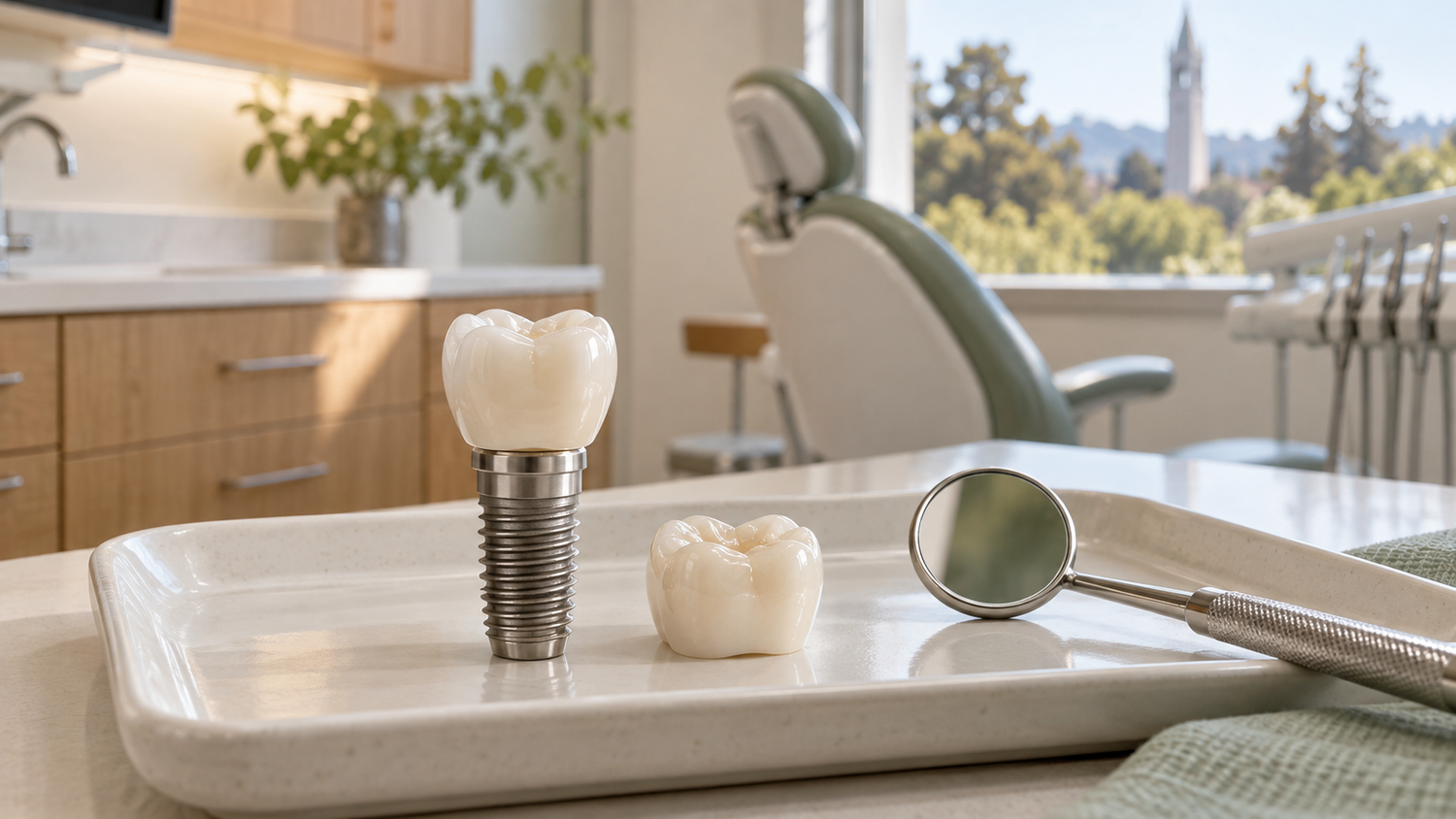
Dental implant cost in Berkeley depends on the number of implants, your bone and gum health, any preparatory care, and the crown, bridge, or denture attached to the implant. Total Health Dental Care (THDC) doesn't publish a current implant price or price range. THDC starts with an examination and 3D imaging, then provides a written treatment estimate. The U.S. Food and Drug Administration says healing of the implant body may take several months or longer. The final restoration follows after the clinician confirms healing.
Last updated: September 24, 2026
Where can you start implant treatment in Berkeley?
THDC's Telegraph Avenue office is at 3017 Telegraph Avenue, Suite 300, Berkeley, CA 94705. It's across from Whole Foods at Ashby. The building has elevator access to the third floor. The office page lists dental implants among the restorative services available through THDC.
Berkeley patients can also begin at the Dana Street office, 2522 Dana Street, Suite 101, Berkeley, CA 94704. Ask the scheduling team which office should handle your first examination. If your plan includes a specialist, confirm who you'll see and where each stage will take place.
What determines the cost of a dental implant?
A dental implant estimate may include imaging, implant placement, an abutment that connects the implant to the replacement tooth, and the final crown, bridge, or denture. Your estimate should state which parts are included and which services would be billed separately.
| Cost driver | What changes | Question for your written estimate |
|---|---|---|
| Number of implants | A single missing tooth, several missing teeth, and a full arch use different numbers of implants and different restorations. A full arch is a full row of replacement teeth in the upper or lower jaw. | How many implants does the plan include, and why? |
| Bone and gum health | Bone grafting or periodontal treatment can add procedures and healing time before placement. | Does my examination show enough healthy bone and gum support? |
| Preparatory care | A damaged tooth may need extraction. Infection or another oral-health issue may need treatment first. | Which preparatory care appears in this estimate? |
| Final restoration | A single crown, implant-supported bridge, and implant-supported denture require different components and laboratory work. | Is the final restoration included in the total? |
| Clinical complexity | Medical conditions, smoking, active gum disease, bone support, and the implant site can change the procedure, schedule, and estimate. | Which findings in my case change the treatment, schedule, or price? |
THDC's dental implant page says the team reviews your medical and dental history, examines the area, and discusses implants alongside bridges and dentures. It advises patients to review the full treatment estimate, including the final restoration.
What is the dental implant timeline?
The first stage is an examination and treatment plan. The dentist reviews your health history, checks the missing-tooth area and nearby teeth, and uses imaging to assess the jaw. The written plan should identify any extraction, bone grafting, or gum treatment needed before implant placement.
During implant placement, the clinician inserts the implant body into the jaw. Healing then allows bone to grow around the implant and hold it in place. The U.S. Food and Drug Administration's implant guidance says this healing may take several months or longer. After the clinician confirms healing, an abutment and the final crown, bridge, or denture can be attached.
Your total timeline depends on bone quality, whether grafting is needed, your overall health, healing, and the number of implants. Ask for the expected sequence in writing. It should distinguish the surgical stage from the later restoration stage.
Can an implant be placed on the same day?
THDC's specialty care page lists dental implants under oral surgery and asks patients to call about same-day specialist availability. It says same-day care depends on specialist availability, your evaluation, and clinical needs. Ask the scheduling team whether a same-day visit would cover an evaluation, extraction, implant placement, or another stage. Infection, bone support, medical history, and the condition of the tooth determine what is safe to complete at one visit.
When you call, describe whether the tooth is missing, loose, broken, or painful. Ask what the appointment is intended to accomplish. An examination, extraction, implant placement, and final restoration are separate stages, even when more than one stage can happen on the same date.
How does THDC coordinate implant care?
The Telegraph dentist can examine the area and explain the proposed treatment. THDC's current dentist directory lists Dr. James Connors as an oral surgeon and Dr. Irene Louie as a periodontist. Both practice at Rotunda Specialty Center, 300 Frank H. Ogawa Plaza, Suite 100, Oakland. The team should tell you which clinician handles each stage and whether a visit outside Berkeley is part of the plan.
Ask who will place the implant, who will make and attach the final restoration, and who will manage follow-up. Keep a copy of the implant brand and model for your records. The FDA specifically recommends asking for that information.
What should you know before choosing an implant?
Implants can support a crown, bridge, or denture. The FDA lists restored chewing, support for nearby bone and gums, and stability for adjacent teeth among the potential benefits. It also lists risks including infection, delayed healing, injury to nearby tissue, difficulty cleaning around the implant, and implant loosening or loss.
Overall health affects candidacy and healing. The FDA says delayed healing and implant loosening or loss may be more likely in patients who smoke. Active gum disease and inadequate bone support may need treatment before implant placement. Ask how your health history changes the recommendation and whether a bridge or denture is a reasonable alternative. The implant, bridge, and denture comparison can help you prepare those questions.
How can you plan for implant costs without insurance?
THDC's current Loyalty Plan costs $600 per year with a two-year commitment. It provides 50% off general and specialty dental treatment until your annual discount savings reach $2,000. You pay the $600 annual membership fee in addition to the discounted treatment cost. The discount can't be combined with other offers or promotions.
Before joining, ask the team to apply the current plan terms to your written implant estimate. Confirm the remaining discount available in that plan year and the cost after the membership fee. If you have dental insurance, ask the office to review your benefits and estimated out-of-pocket cost. Coverage depends on the plan and treatment.
What belongs in a written implant estimate?
Request a line-by-line estimate that names the implant placement, abutment, final restoration, imaging, preparatory care, and follow-up. If the plan includes grafting, extraction, sedation, or treatment for gum disease, ask why it's recommended and how it changes the schedule.
Compare the estimate with the treatment sequence. An estimate for implant placement may exclude the crown or another later service. Ask for the total expected cost across every planned stage. Have the office identify any services whose cost could change and the findings that would change it.
What else should you ask before treatment?
How long will I be without a tooth?
Ask whether a temporary tooth is appropriate during healing and when the final restoration is expected. The answer depends on the implant site, bone support, and treatment plan.
How should I care for the implant?
Follow the clinician's cleaning instructions and return on the schedule they recommend. The FDA advises patients to clean the implant and surrounding teeth carefully and report looseness or pain right away.
Will I need bone grafting?
Imaging and examination determine whether the jaw has enough bone to support the implant. If grafting is recommended, ask what finding supports it, how it changes the cost, and how much healing time it adds.
Who should I call if something feels wrong?
Ask which office handles post-procedure questions and urgent problems. Contact the dental provider right away if the implant feels loose or painful.
Where can you find Total Health Dental Care?
THDC has 13 offices. Confirm the office for each appointment because implant care may involve more than one clinician.
- Old Oakland, 827 Broadway, Suite 320, Oakland
- 15th Street, 363 15th Street, Oakland
- Grand Ave, 3931 Grand Avenue, Suite 202, Oakland
- Temescal, 407 41st Street, Oakland
- Montclair, 6201 Antioch Street, Suite 102, Oakland
- Piedmont, 1880 Pleasant Valley Avenue, Suite F, Oakland
- Dana Street, 2522 Dana Street, Suite 101, Berkeley
- Telegraph Avenue, 3017 Telegraph Avenue, Suite 300, Berkeley
- Albany, 1396 Solano Avenue, Albany
- Emeryville, 2334 Powell Street, Emeryville
- Marina, 809 Marina Village Parkway, Alameda
- Belmont, 390 El Camino Real, Suite D, Belmont
- Rotunda Specialty Center, 300 Frank H. Ogawa Plaza, Suite 100, Oakland
To start in Berkeley, schedule an appointment or call (510) 495-1075. Ask for the full implant treatment sequence and expected cost in writing before treatment begins.
