
A Guide to Dental Plan Options for Small Businesses
A Guide to Dental Plan Options for Small Businesses
Many small business owners want to support their staff with health benefits, including dental care. The challenge lies in finding small business dental plans that balance quality coverage with affordable costs for your company.
Navigating the variety of available options can feel overwhelming, which is why we’ve put together this helpful guide. In this article, we break down small business dental coverage options, explain how different plans work, and outline the typical costs, so you can choose a plan that meets your budget and your team’s needs.
Types of Small Business Dental Plans
Several distinct plan types serve small businesses, each with unique characteristics, advantages, and limitations. Let’s take a look at what’s commonly available today.
PPO Dental Plans
Preferred Provider Organization (PPO) plans offer flexibility in choosing dental providers while providing cost advantages for using in-network dentists. Employees can visit any licensed dentist, but receive higher coverage percentages and lower out-of-pocket costs when selecting network providers.
In-network dentists have negotiated fee schedules with the insurance company, reducing costs for both the plan and the patient. Out-of-network visits typically result in higher deductibles, lower coverage percentages, and potential balance billing, meaning the patient may owe the difference between the dentist’s charge and the plan’s allowed amount.
PPO plans work well for teams that value provider choice and may already have established relationships with particular dentists. The flexibility appeals to employees, but the downside is that these plans typically have higher premiums than more restrictive plan types.
HMO/DMO Dental Plans
Health Maintenance Organization (HMO) or Dental Maintenance Organization (DMO) plans have lower premiums in exchange for more structured care delivery. Employees select a primary dentist from the plan's network, who coordinates all their dental care and coordinates referrals to specialists within the network when needed.
These plans typically require care within the network, with little to no coverage for out-of-network services (except for true emergencies, depending on the plan). The primary dentist model ensures coordinated care and helps control costs through managed referrals.
HMO/DMO plans suit small businesses seeking to minimize premium costs and employees comfortable with the primary dentist approach. The trade-off between lower costs and reduced provider choice makes these plans ideal for budget-conscious businesses where most employees don't have strong existing dentist relationships.
Indemnity (Fee-for-Service) Plans
Indemnity plans use a reimbursement structure giving employees maximum provider choice. Employees can visit any licensed dentist, pay for services upfront, then submit claims for reimbursement based on the plan's fee schedule.
These plans typically reimburse a percentage of "usual, customary, and reasonable" fees for the geographic area. Employees may face out-of-pocket costs if their dentist's fees exceed these amounts.
Indemnity plans work best for teams that want complete freedom in provider selection and are comfortable managing the claims submission process. Higher administrative requirements and premiums make these plans less common among small businesses.
Dental Discount Plans (Not Insurance)
Dental discount plans aren’t insurance, but rather dental membership programs that provide reduced fees at participating dentists. Employees pay an annual or monthly membership fee and receive discounts typically ranging from 10% to 60% on various dental services.
These plans work alongside or instead of traditional insurance. Some small businesses offer discount plans as an affordable benefit when traditional insurance exceeds budget constraints, or as a supplement that helps employees save on services that exceed their insurance annual maximums.
Key limitations include no coverage per se (employees still pay for all services, just at reduced rates), network restrictions limiting provider choice, and variable discount percentages, making cost prediction difficult. However, the low membership fees and immediate access without waiting periods appeal to budget-conscious businesses.
Fully Insured vs. Self-Funded Dental Plans

Small business dental insurance typically comes in the form of fully insured plans, where businesses pay monthly premiums to insurance carriers that assume the financial risk and handle claims. This arrangement provides predictable costs and minimal administrative burden, making it ideal for most small businesses.
Self-funded plans involve businesses directly paying for employee dental claims rather than paying insurance premiums. The business assumes financial risk but potentially saves money if claims run lower than expected. Third-party administrators often handle claims processing for a fee.
For many small businesses, fully insured plans often make more sense. Self-funding requires sufficient cash reserves to cover unexpected claim spikes and works best for larger companies with predictable claim patterns. The administrative complexity and financial risk typically outweigh potential savings for small teams.
How Small Business Dental Insurance Works
Small business owners should evaluate their plan’s premiums, deductibles, and copays, and fully understand what’s actually covered.
Monthly premiums represent the amount your business pays per employee for coverage, often with employees contributing a portion through payroll deductions.
Deductibles are annual amounts employees must pay out of pocket before insurance begins covering services. Preventive care is often covered without applying the deductible, encouraging regular checkups and cleanings.
Copays are fixed amounts employees pay for specific services. Some plans use copays instead of percentage-based coinsurance for predictable costs.
Typical coverage follows a tier structure:
Preventive services like cleanings, exams, and X-rays often receive 100% coverage and may not count toward the deductible.
Basic services, including fillings, simple extractions, and periodontal treatment, typically receive 70-80% coverage after the deductible (periodontal services may be classified differently depending on the plan).
Major services like crowns, bridges, root canals, and dentures are covered at 50% after the deductible. Root canal therapy may be categorized as basic or major, depending on the plan.
Annual maximums cap how much the plan pays per person each year, typically ranging from $1,000 to $2,000. Once this limit is reached, employees pay 100% of additional costs until the next plan year.
Waiting periods prevent immediate use of coverage for certain services, typically exempting preventive care but requiring waits of 6-12 months for major procedures.
What's Covered in Most Dental Plans for Small Businesses
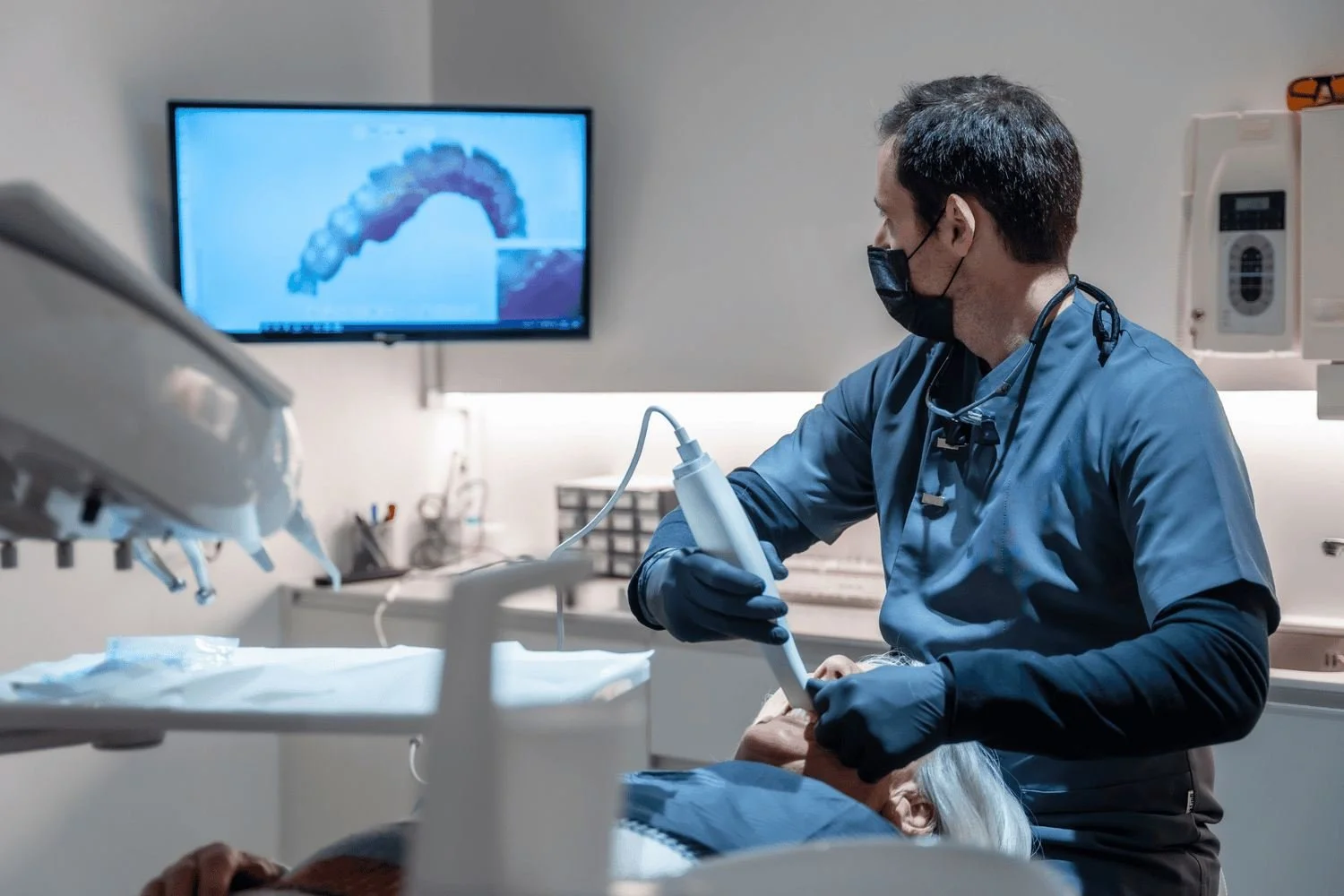
Most plans provide comprehensive coverage across service categories. Preventive care, including routine cleanings (usually 2 per year), comprehensive oral exams, X-rays, and fluoride treatments, is typically fully covered.
Basic restorative procedures, such as fillings for cavities, simple extractions, and some endodontic (root canal) or periodontal services for gum disease, receive partial coverage, usually 70-80% after the deductible.
Major restorative work, including dental crowns, bridges, dentures, dental implants (if covered), and complex oral surgery, receives limited coverage, generally 50% after the deductible, reflecting these procedures' higher costs.
Orthodontics coverage varies significantly. Some plans exclude orthodontic treatment entirely, while others offer limited lifetime benefits.
Cosmetic procedures like teeth whitening and veneers for purely aesthetic purposes typically aren't covered, though exceptions exist when procedures restore function or address damage.
How to Choose the Right Dental Plan for Your Small Business
Shopping around for the right dental insurance for your small business requires balancing multiple factors. Start by evaluating employee needs and expectations through surveys or informal discussions.
Budget considerations involve both premium costs and employee cost-sharing. Calculate total annual costs, including premiums, administrative fees, and estimated out-of-pocket expenses employees will face. Consider what percentage of premiums your business will cover versus employee contributions.
Compare several quotes from different carriers, examining not just premiums but coverage levels, network size, and annual maximums. A slightly higher premium might deliver significantly better coverage value.
At Total Health Dental Care, we make it easy for your team to access trusted dental services with convenient locations, flexible scheduling, and clear communication about costs and coverage.
Schedule a visit or consultation to learn how we support your team's oral health needs and provide small business dental plans with exceptional care.
FAQS
What is the difference between dental insurance and dental discount plans for small businesses?
The difference between dental insurance and dental discount plans for small businesses is that insurance provides actual coverage while discount plans simply reduce costs. Insurance works better for comprehensive benefits, while discount plans serve as affordable alternatives when insurance exceeds budgets or as supplements to insurance for services exceeding annual maximums.
How much does dental insurance for small business typically cost per employee?
Costs vary based on location, coverage levels, and plan type, but small businesses typically pay $15-50 per employee monthly for basic coverage. Comprehensive plans with higher coverage percentages and annual maximums may cost $50-100+ per employee monthly. Total costs depend on employer contribution percentages: many businesses cover 50-100% of employee premiums and require employees to pay the full cost for dependent coverage.
Does dental coverage continue if an employee leaves the company?
Dental coverage typically does not continue when an employee leaves a company, as work insurance usually ends when employment terminates, though exact timing depends on plan rules. COBRA (Consolidated Omnibus Budget Reconciliation Act) allows employees to continue group coverage by paying the full premium plus administrative fees for up to 18 months after leaving. Some plans offer conversion options that allow employees to convert to individual policies without incurring COBRA's high costs, though coverage may differ from the group plan.
